
Overview

Joint injections place medication directly into a painful joint. This page explains the main types, what each can and cannot do, and how safe they are.
What are joint injections?
Joint injections deliver medication directly into the affected joint to reduce inflammation, relieve pain and improve movement. Relief is often faster and more effective than with tablets alone.
Please note that injections will not cure your problem. They either control the disease process or suppress it. How long the effect lasts varies and depends on the severity of the condition.
Types of joint injections
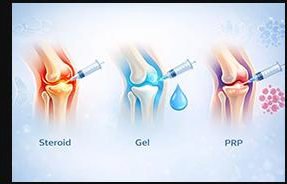
- Corticosteroid injections: quickly reduce inflammation and give relief within a few days. Suited to painful flare-ups.
- Hyaluronic acid (gel) injections: improve joint lubrication, reduce stiffness and may give longer-lasting relief. Best for early to moderate knee arthritis.
- Platelet-rich plasma (PRP): offered selectively, as its benefits are limited and it is not suitable for every patient.
About PRP
Platelet-rich plasma (PRP) is a natural treatment that uses your own blood to deliver growth factors, helping to reduce inflammation and support healing. It may be beneficial in:
- Early-stage arthritis
- Selected active individuals
- Certain tendon conditions (tendinitis)
Careful patient selection is essential to achieve meaningful results.
PRP will not reverse advanced knee osteoarthritis. At present, the only definitive treatment for end-stage disease is knee replacement surgery.
In Sri Lanka, PRP is often heavily marketed, which can create unrealistic expectations. Patients who are understandably hesitant about surgery may be drawn to alternative options by persuasive advertising. The same is true of marketed “magic pills”, ayurvedic oils and pastes: these do not reverse advanced arthritis either. The usual result is disappointment when the expected results are not achieved.
Why choose joint injections?
- Minimally invasive
- Quick outpatient procedure
- Faster pain relief
- May improve mobility
Are joint injections safe?
Yes, when they are performed by a trained orthopaedic specialist using sterile techniques. Side effects are uncommon and usually mild.